
· 8 min read · By Football Schedules Hub · Updated
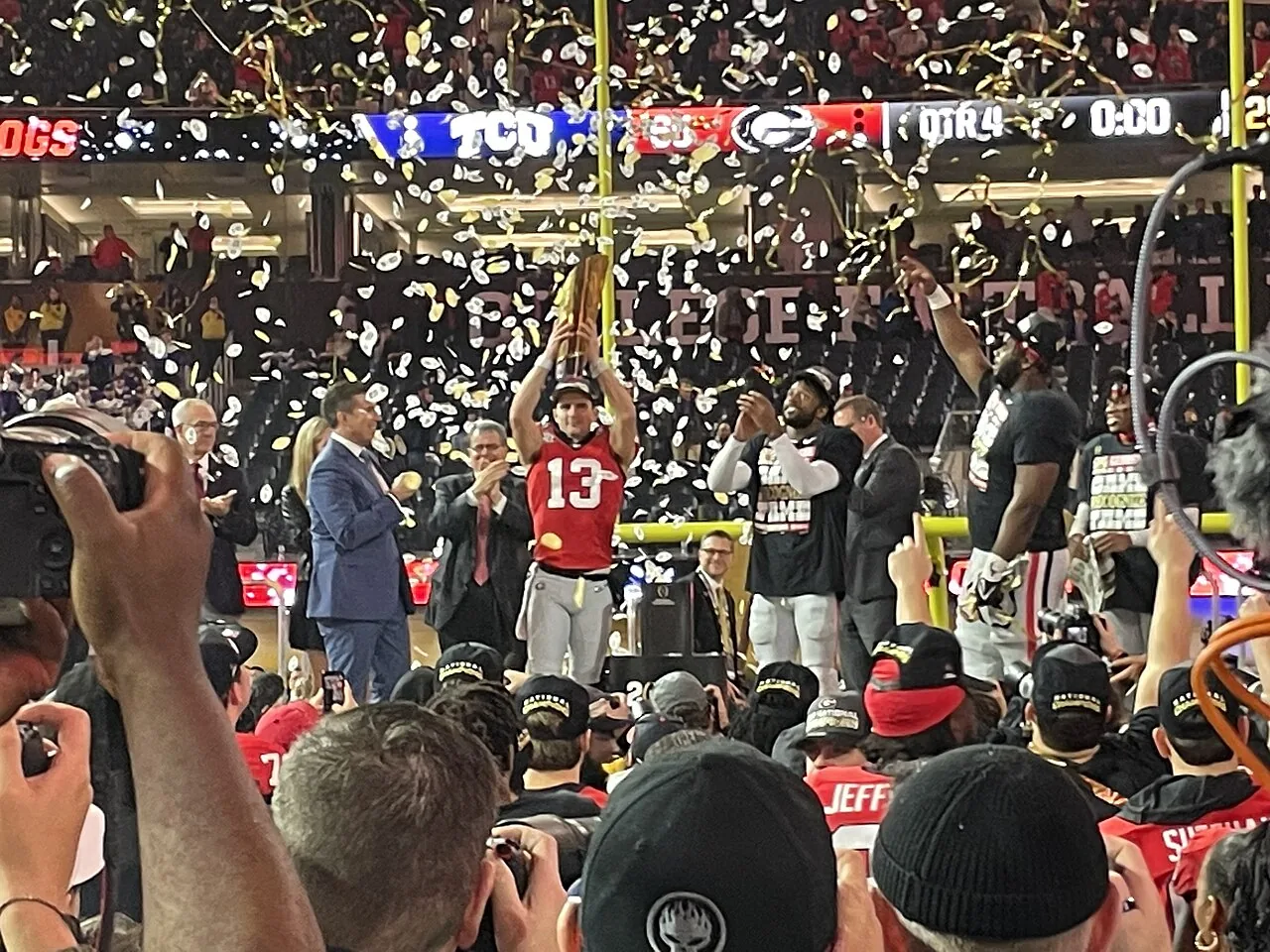

The 2026–27 College Football Playoff uses a twelve-team bracket, but understanding it takes more than remembering the number twelve. Selection decides which teams enter. Seeding decides where they sit in the bracket. The round-by-round schedule then determines which games take place on campus and which belong to the postseason bowl and championship calendar.
Some details have changed since the first expanded playoff. This guide follows the current official framework and separates it from predictions about future seasons. If you are trying to understand your team’s route, begin with the access rules and remaining schedule rather than treating an October poll position as an announced December matchup.
Selection and seeding answer different questions
Selection asks whether a team is included in the field. Seeding organizes the selected teams into the bracket. Those questions are related, but they are not identical, particularly when the format contains guaranteed access provisions.
Think of the process as two steps. First determine the participating teams under the published rules. Then apply the seeding framework to that field. A graphic that skips the first step can leave supporters wondering why a simple numerical cutoff does not appear to explain every position.
For practical discussion, use the right word. Saying a team could qualify is different from saying it would receive a particular seed. Saying it might host is different again. Separating those possibilities helps you follow the race without accidentally turning one favourable scenario into a promise about the entire postseason.
The current access framework
The CFP’s official 2026 announcement identifies the champions of the ACC, Big Ten, Big 12, and SEC, plus the highest-ranked team from the American, Conference USA, MAC, Mountain West, Pac-12, or Sun Belt, alongside the next seven highest-ranked teams. Use the current wording rather than assuming an older conference-champion rule still applies unchanged.
These provisions explain why winning a conference can be highly significant without making every conference race operate identically. They also explain why a projected field needs to apply the format, not just copy the first twelve names from an unrelated poll.
When following a team’s route, identify which part of the framework could apply to it. Is it pursuing a conference championship route, competing for the relevant representative place, or trying to build an at-large case? That question gives the remaining schedule a more useful context than a generic statement that every contender needs exactly the same results.
Notre Dame’s specific provision
The current framework includes a provision for Notre Dame to enter the field if it finishes among the top twelve in the final committee rankings. That is a specific feature of the 2026 rules, not a general rule that can be applied to every independent program.
Read the qualifying language carefully. An October media poll is not the final committee ranking. A projection of where a school might finish is not the final list either. The condition must be evaluated at the appropriate stage of the actual selection process.
This is a useful example of why copying last season’s playoff explainer can cause problems. A guide can describe the same twelve-team bracket while getting an important access provision wrong. Check the season and official source whenever a claim about automatic inclusion seems to contradict a graphic you have seen elsewhere.
What a first-round bye means
The four highest seeds receive first-round byes under the current format. A bye means advancing past the opening round without playing that round’s game. It does not mean a team has already won a quarterfinal or earned a guaranteed place in the championship.
For supporters, the practical consequence is a different postseason timetable. A team playing in the opening round has an additional event to prepare for, while a bye recipient begins later. That can affect travel decisions, viewing plans, and the amount of uncertainty before a potential next opponent becomes known.
Do not confuse a favourable route with an easy result. The bracket explains the games required to advance; it cannot guarantee who will win them. It is reasonable to discuss the value of avoiding an extra elimination game without pretending that the later rounds become automatic victories.

How the first-round pairings work
The opening-round pairings are seeds five against twelve, six against eleven, seven against ten, and eight against nine. The higher-seeded participants host under the CFP’s first-round arrangements, subject to the official event and venue framework.
This creates a meaningful distinction between being included in the field and receiving a hosting position. A supporter following a team near those places should watch both the selection question and the seeding question. The answers can have very different travel implications.
For a hypothetical eighth seed, the immediate focus would be its opening game against the ninth seed. Supporters should not begin by planning the quarterfinal as though the first game has already been won. The bracket supplies a possible path, but the next confirmed event is the sensible starting point for tickets, accommodation, and game-day information.
The bracket continues through later rounds
After the first round, the competition proceeds through quarterfinals, semifinals, and the national championship. The official bracket shows how the paths connect. Read those connections directly rather than assuming later opponents are redrawn according to a fresh ranking after every round.
A fixed path is useful for understanding possibilities, but it remains conditional until results identify the advancing teams. A supporter can know which side of the bracket a team occupies without knowing the exact opponent it will face in the next game.
Use that distinction in conversation and planning. “The winner advances along this path” is a bracket statement. “Our team will play that opponent” is a prediction unless both participants have already advanced. Clear conditional language makes the postseason easier to follow, especially when several games are being discussed on the same broadcast.
Check the current bowl and championship calendar
The official schedule places the first round in December and the championship in January, with the 2026–27 title game scheduled for January 25, 2027, in Las Vegas. Use the current event calendar for the intervening dates, sites, and television assignments.
Do not assume a familiar bowl always has the same playoff role every year. An event’s role in one season does not automatically carry forward unchanged into another. The current bracket and event information explain where a particular round is being played.
For travel, confirm the actual stadium rather than stopping at the host-city name. Then check the event’s ticket distribution, entry policies, and arrival information. A postseason trip is easier to organize when the sporting path and the practical venue details are treated as separate tasks that both need confirmation.
Interim rankings are checkpoints
The committee’s weekly rankings help supporters follow the developing race before the final selection. They are informative, but they do not lock a team into a berth, seed, or opponent while meaningful games remain on the schedule.
When a projected bracket accompanies an interim release, read the assumptions behind it. The graphic is illustrating how the current picture might translate under the format. It is not announcing that tickets for those exact matchups should be purchased as confirmed events.
Connect the ranking to the remaining games. Which contenders meet? Which conference races are unresolved? What evidence can still change the comparison? Those questions make the weekly releases useful even when your team’s position is uncomfortable or when several commentators disagree about the likely final field.
Use a hypothetical example without confusing it with a prediction
Imagine a team that appears near the edge of an interim committee list. It still has two regular-season games and a possible conference championship appearance ahead. The right question is not simply whether its current number is below a remembered cutoff.
Instead, identify the relevant access route, the remaining opponents, and the outcomes still required for the conference situation to develop. Then distinguish what the team can control from results involving other programs. This produces a meaningful scenario rather than a misleading declaration that one isolated ranking has settled the season.
The same method works for a highly ranked contender. A strong position can create attractive possibilities, but the actual final selection still has to occur. Keeping the example conditional lets you discuss football seriously without turning an explanation of the bracket into a prediction presented as an official decision.
What to do when the field is announced
Begin with the CFP’s official bracket and your school’s announcement. Confirm the opponent, round, date, venue, and broadcast. Then read ticket and event instructions from the relevant official sources before organizing the rest of the trip.
Update any calendar entries that were based on a possible route. A speculative reminder can remain useful, but it should not coexist with a confirmed game in a way that confuses the group. Replace assumptions deliberately and keep the source links with the final arrangements.
Understanding the playoff is ultimately about keeping stages clear: selection, seeding, the next game, and the possible path beyond it. Follow the current season’s rules and official announcements at each stage. You can then enjoy the debate and the bracket without asking either one to provide certainty before the games have earned it.
A seed is a position, not a probability
The number beside a playoff team describes its position in the bracket. It is not a published percentage chance of winning, and the difference between two seeds is not an expected scoring margin. Those are different kinds of analysis.
For a hypothetical fifth seed, the practical information is its place in the opening-round structure and the path connected to that place. Predicting whether it will win requires a separate assessment of the actual opponent and game. The bracket does not provide that prediction automatically.
Keeping this distinction clear improves postseason discussion. You can explain the official route precisely while remaining uncertain about the outcomes. Supporters do not need to agree on a likely champion to agree on where a confirmed team sits, which game comes next, and what must happen for a later matchup to become real.
Sources and further reading
Official references checked for this guide’s October 25, 2026 review. Broadcast assignments and event details can change.
Start here
Browse the site
Browse all teams · The full 2026 schedule · Postseason planning